Training Ophthalmic Technicians More Efficiently
Technicians perform most acuity testing in a busy practice. A standardized approach to training shortens onboarding and produces more consistent measurements.
Published June 19, 2026 · By Mark S. Brown, MD
In most practices, ophthalmic technicians and medical assistants perform the majority of visual acuity testing. The quality and consistency of that testing depends heavily on how they are trained. Training that is ad hoc — learning by watching whoever is free — tends to produce variable results. A more structured approach shortens the learning curve and improves consistency across the whole team.
Why variability creeps in
New technicians face several variables at once: multiple chart types, different optotypes for different ages, calibration to lane distance, and protocol decisions about scoring and stopping rules. When each technician learns these informally, small differences in technique accumulate into measurable differences in results. The goal of efficient training is to remove as many of those variables as possible.
Standardize the tool first
The single biggest accelerator is a consistent testing system. When every lane runs the same software with the same interface, a technician learns one workflow rather than several. Browser-based systems make this easier still: the tool behaves identically on any computer, so training transfers directly between lanes and locations. There is no projector-specific quirk to relearn per room.
A structured onboarding path
An efficient onboarding sequence for acuity testing looks like this:
- Fundamentals. What visual acuity measures, Snellen versus ETDRS/LogMAR notation, and why distance and luminance matter. A shared glossary gives everyone the same vocabulary.
- The chart types. When to use each — standard letters, pediatric optotypes, color vision, contrast sensitivity, Worth 4-Dot.
- Hands-on the actual system. Practice on the software the practice uses, including calibration and randomized presentation.
- Protocol. How lines are scored, how partial lines are handled, and when to stop — written down, not assumed.
- Competency check. A short, observed assessment before independent testing.
Reinforce with reference material
Technicians retain more when they can look something up. A short internal reference — or a public resource like a visual acuity glossary and clinical guides — lets a technician confirm, for example, which pediatric optotype suits a three-year-old without interrupting a senior colleague. This is also where standardized software helps: built-in chart types mean the technician selects rather than improvises.
The principle: efficient training removes variables. A single standardized system, a written protocol, and a clear competency check turn acuity testing from an apprenticeship into a repeatable skill.
Ongoing consistency
Training is not only onboarding. Periodic competency checks — particularly around calibration, optotype selection, and pediatric testing — keep the whole team aligned as staff change. A standardized, well-documented testing system makes those checks straightforward, because everyone is measured against the same workflow.
Frequently asked questions
How long does it take to train a technician on visual acuity testing?
With a standardized system and a structured onboarding path — fundamentals, chart types, hands-on practice, protocol, and a competency check — technicians can reach reliable independent testing far faster than with informal, learn-by-watching training.
Does standardized software make training easier?
Yes. When every lane runs the same software with the same interface and built-in chart types, technicians learn one consistent workflow that transfers directly between lanes and locations.
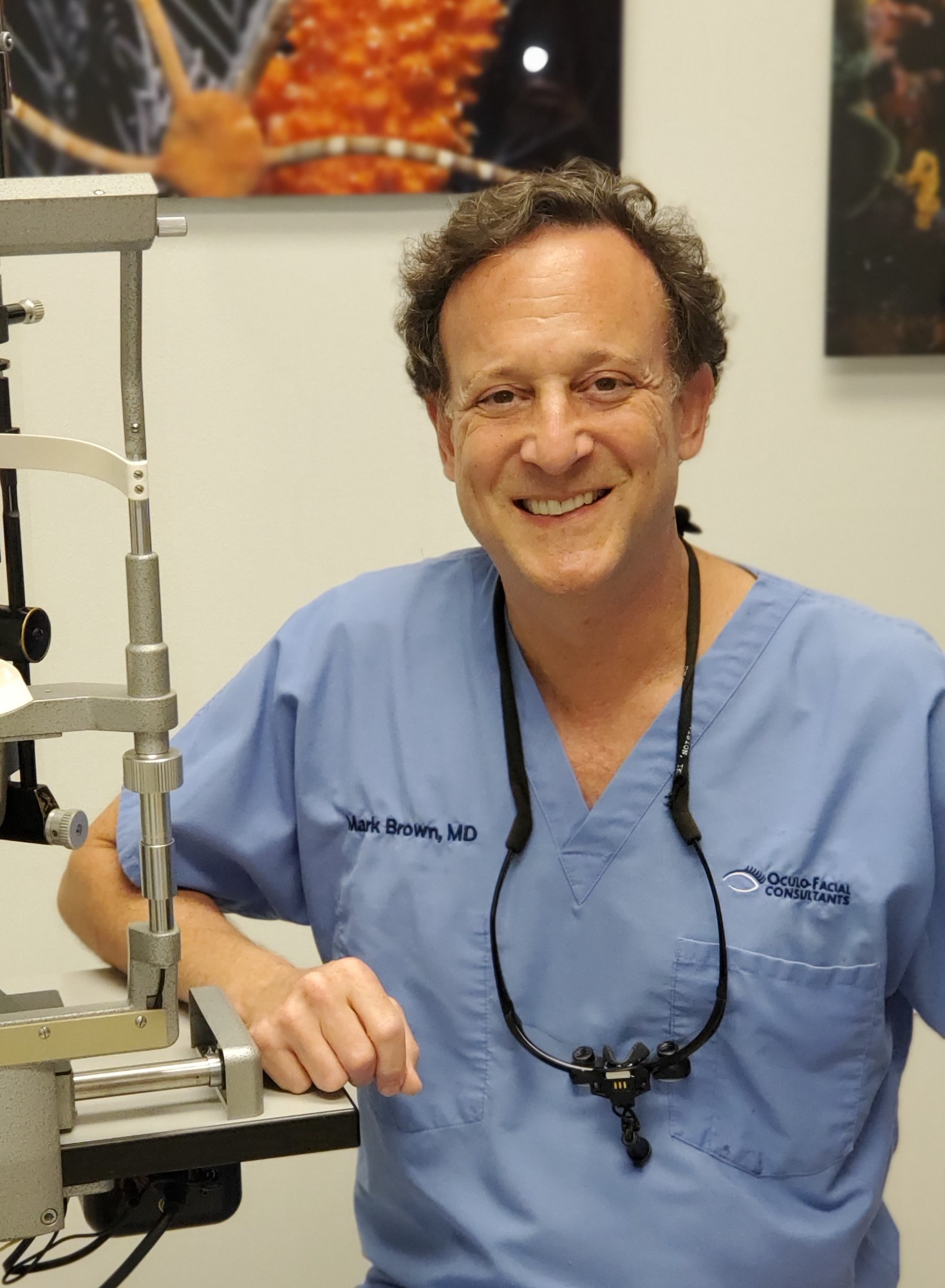
Mark S. Brown, MD
Oculoplastic surgeon at Oculo-Facial Consultants and founder of AcuityMaster. In clinical practice since 1998.
See AcuityMaster in your own exam lane
15-day fully functional trial — every chart and optotype, no credit card.