Reducing Visual Acuity Testing Errors
Acuity testing seems simple, but small, repeatable errors can shift a measurement by a line or more. Here are the common sources of error and how to control them.
Published June 19, 2026 · By Mark S. Brown, MD
Visual acuity is one of the most frequently recorded measurements in eye care, which makes consistency essential. A change of one line can influence a treatment decision, a referral, or a research endpoint. Yet several common sources of error are easy to overlook. Recognizing them — and building a workflow that controls them — improves the reliability of every measurement.
Chart memorization
With a fixed printed or projected chart, patients seen repeatedly can memorize the letter sequence, inflating measured acuity. This is especially relevant for patients monitored over many visits. Randomized letter presentation — available in software charts — eliminates the problem by drawing a different valid set each time.
Distance and calibration
Acuity is an angular measurement, so the patient-to-screen distance must match what the chart assumes. A chart calibrated for 20 feet but used at 18 will overstate acuity. With software, the distance is entered explicitly and the optotypes are sized to it; with printed charts and mirrored lanes, the effective optical path is easy to get wrong. Re-verify calibration whenever a monitor or chart is moved.
Luminance drift
Background luminance affects contrast and therefore the threshold a patient can read. ANSI Z80.21 specifies 80–320 cd/m² for a reason. Projector bulbs dim measurably as they age, gradually reducing contrast and shifting results without anyone noticing. Maintaining luminance — and verifying it periodically — removes a slow, invisible source of error.
Crowding and optotype choice
Patients with amblyopia often read isolated letters far better than letters in a row, the crowding phenomenon. Testing with single optotypes can therefore miss amblyopia entirely. Use full lines or crowding bars where crowding matters. Equally, the optotype should match the patient: a child who cannot yet name letters needs Lea Symbols or HOTV, not Sloan letters.
Examiner variability
Different technicians may encourage, pace, or score patients differently. Standardizing the protocol — how many letters define a line, how partial lines are scored, when to stop — reduces this variability. ETDRS scoring, which credits each letter, is more granular and reproducible than line-by-line Snellen scoring for monitoring small changes.
The pattern: most acuity errors come from variables that drift silently — distance, luminance, memorization, and protocol. Controlling those variables is what makes a measurement trustworthy.
How standardized software helps
Software does not replace good technique, but it removes several error sources at once: it randomizes letters, fixes the optotype geometry to standard, holds luminance steady, and applies the same scoring rules every time. Combined with a clear protocol and trained technicians, that is how a practice keeps acuity measurements consistent across patients, lanes, and visits.
Frequently asked questions
What is the most common visual acuity testing error?
Two stand out: patients memorizing a fixed chart over repeat visits, and mismatched test distance or calibration. Both are addressed by randomized, distance-calibrated software charts.
How does ETDRS scoring reduce error?
ETDRS charts have five equally weighted letters per row and letter-by-letter scoring, giving finer, more reproducible measurements than line-by-line Snellen scoring — important when monitoring small changes.
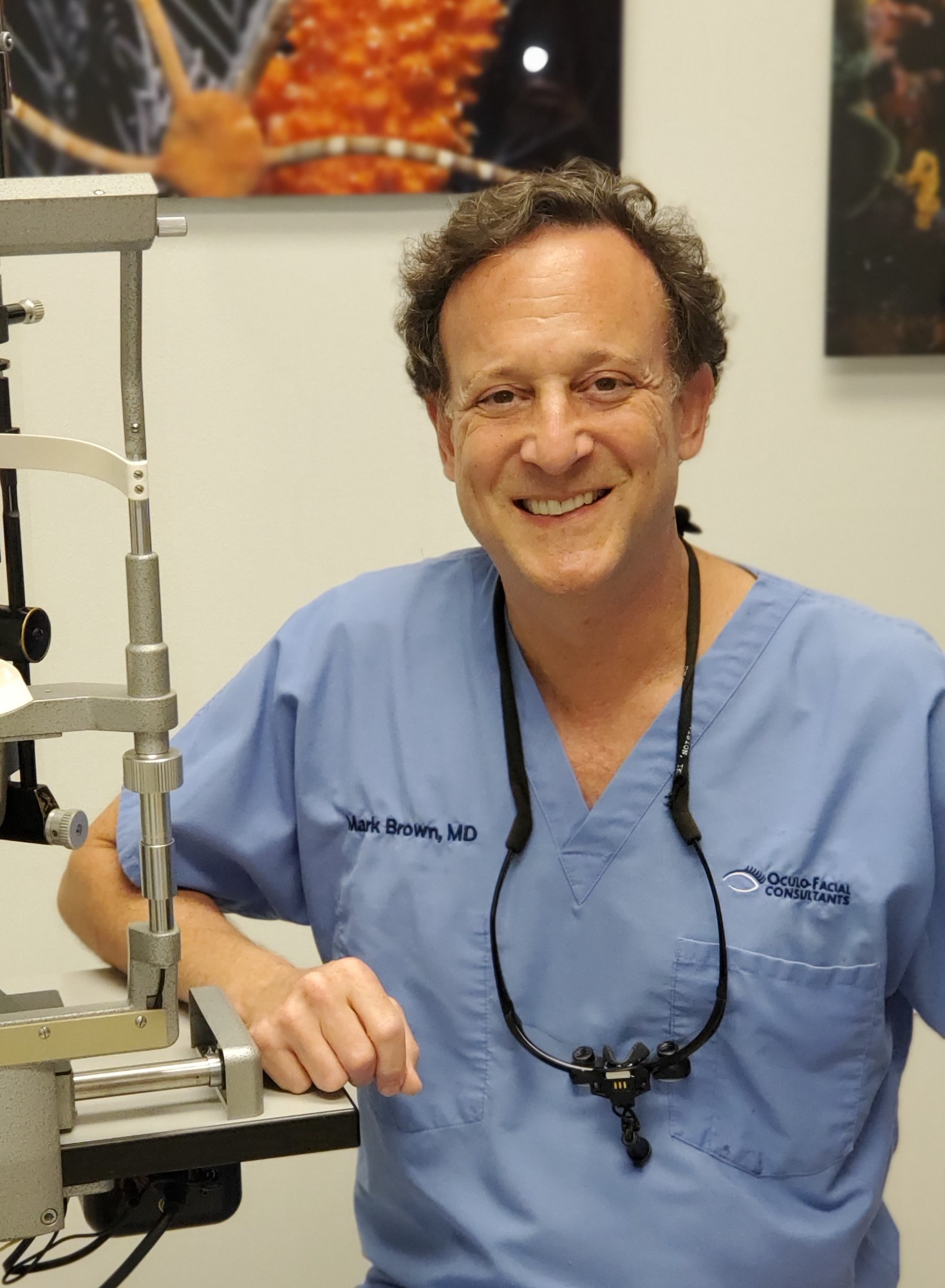
Mark S. Brown, MD
Oculoplastic surgeon at Oculo-Facial Consultants and founder of AcuityMaster. In clinical practice since 1998.
See AcuityMaster in your own exam lane
15-day fully functional trial — every chart and optotype, no credit card.